




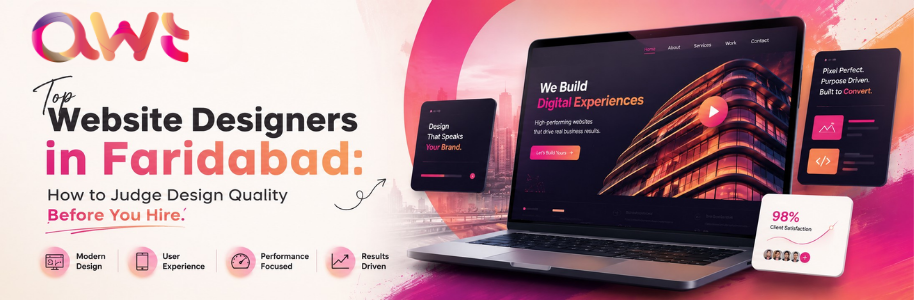
A clothing brand owner showed me two website mockups once and asked which one I'd pick. Both looked polished, honestly. Nice fonts, decent color choices, smooth animations in the demo video, all of it. I asked her a different question instead: which one would actually get someone to add a product to their cart faster. She hadn't thought about it that way at all. Neither had either designer, as it turned out, because neither had actually bothered asking what her real customers needed to see before they'd buy anything.
That's the thing about "top" designers that search results never quite capture. A beautiful site and an effective one aren't automatically the same thing, and a lot of businesses in Faridabad end up with the former when they actually needed the latter. Good design solves a problem, at the end of the day. It just happens to look good while doing it. Even a search for the best website design company Faridabad has to offer, or a list of professional web designers near me, tends to surface the same handful of names — the real work is figuring out which ones actually back up the pitch. Search for the best website design company Faridabad has to offer, or just "professional web designers near me," and you'll get a long list of options that all sound remarkably similar on the surface — which is exactly why knowing what to actually check matters more than the search results themselves.
Quick answer: the top website designers in Faridabad are the ones who can show a portfolio of live, functioning sites (not just static mockups), explain their design decisions in terms of user behavior rather than just aesthetics, and demonstrate real understanding of mobile experience and page speed alongside visual design. If a designer can't explain why they made a specific choice beyond "it looks nice," that's worth noticing.
Why Design Quality Actually Affects the Business, Not Just the Look
A website is often the first real interaction someone has with a business, and design shapes that impression before a single word ever gets read. Cluttered layouts, inconsistent spacing, text that's hard to read on a phone — these things quietly push people away before they've even learned what a business actually offers.
There was a local clinic I worked with that had genuinely excellent doctors, but a website that felt stuck somewhere around 2014 — tiny fonts, a navigation menu that didn't work properly on mobile, a contact form buried three clicks deep for no real reason. Their enquiries picked up noticeably after a redesign that focused less on making things "look modern" and more on making the booking process obvious within seconds of landing on the homepage. The design changes weren't dramatic, honestly. The clarity was.
Design vs. Development: A Distinction Worth Understanding First
People often use "web designer" and "web developer" interchangeably, and while some professionals genuinely do both well, they're actually pretty different skill sets underneath. A designer focuses on layout, visual hierarchy, color, typography, and user experience — basically how the site looks and feels to actually use. A developer builds the functioning code behind all of that, handles backend logic, and makes sure everything works properly across different devices and browsers.
The best outcomes usually come from these two working closely together, whether that's one person genuinely skilled in both or a designer and developer collaborating side by side on the same project. This is really what proper UI UX design services should mean in practice — not just a pretty layout handed off to someone else to make functional, but genuine collaboration from the start. A gorgeous design that a developer can't actually build properly ends up compromised somewhere along the way. And solid code wrapped around a confusing, cluttered layout underperforms no matter how well it's built underneath the surface, whatever a creative web design agency might promise in its pitch.
What Actually Makes a Designer Genuinely Good, Not Just Popular
They design around user behavior, not personal taste
A skilled designer asks what a visitor's actually trying to accomplish on each page before deciding how it should look at all. Someone landing on a service page wants to know what's offered and how to reach out quickly. Someone landing on a product page wants clear pricing, decent images, and an obvious path to actually buying — this is where ecommerce website designers specifically earn their keep, since a cluttered product page costs real sales in a way a cluttered blog post never quite does. Design choices should serve that intent, not just look impressive sitting there in isolation.
Mobile comes first, not last
More than half the traffic most Faridabad businesses see now comes from phones. Genuinely, not a rounding error. A designer still thinking primarily in desktop layouts and adapting downward from there tends to produce mobile experiences that technically function but feel cramped and awkward once you're actually holding the thing and trying to use it. Any responsive web design company worth hiring should be designing mobile-first from the very first wireframe, not testing on a phone as an afterthought once the desktop version's already locked in. This is really the whole idea behind a responsive web design company doing its job properly — not just resizing elements to fit, but rethinking how people actually interact with a smaller screen.
Speed matters as much as looks, maybe more
Heavy animations, oversized images, unnecessary visual effects — they look striking in a portfolio demo, sure. But they often tank real-world load times once the site's actually live, and nobody's watching a demo reel when they're trying to book an appointment on their lunch break. A genuinely skilled designer builds visual appeal that doesn't fight against Core Web Vitals and overall site performance.
They think about conversion, not just visual polish
There was a startup I worked with that had a beautifully designed landing page which converted poorly, because the actual call-to-action button was visually subtle, tucked below content most visitors never even scrolled far enough to see. Once the design got reworked around what visitors actually needed to see first, cost per lead from their ad campaigns dropped meaningfully — and that had nothing to do with the ads themselves at all. This matters even more for ecommerce website designers specifically, where every extra click between a product image and the checkout button quietly costs real sales.
SEO structure isn't a separate step
Heading hierarchy, alt text on images, clean and logical page structure — all of it affects SEO, whether a designer thinks about it or not. Ignoring this just creates extra work for whoever ends up handling SEO down the line. A beautiful site that search engines can't parse well doesn't reach nearly as many people as it should, which somewhat defeats the point of making it beautiful in the first place.
Real content, not filler
Designs built entirely around "lorem ipsum" often fall apart once actual content gets dropped in. Headlines run longer than expected. Product descriptions don't fit the layout cleanly. Testing with real content earlier catches this before launch instead of after, when it's a lot more annoying to fix.
Common Mistakes Businesses Make When Hiring a Designer
The most common one, by far, is choosing based purely on a portfolio's visual appeal without ever asking about results. A stunning portfolio piece might've actually performed poorly for the client it was built for — a polished screenshot doesn't reveal conversion rates, load times, or bounce rates hiding behind it.
Trendy design elements get prioritized over usability more than you'd think, too. Heavy parallax scrolling, excessive animation, overly minimalist navigation — all of it can look sophisticated in a demo, but it frustrates real visitors just trying to find information quickly.
Then there's mobile testing, or the lack of it. Nobody asks about it specifically, and a design that looks great on the designer's laptop can break down pretty badly on an actual phone with a smaller screen and a slower connection. This gets missed constantly, even by experienced business owners who should know better by now.
Page speed gets ignored too, right up until it's a problem. There's a manufacturing company I know that once approved a beautifully designed homepage with several large background videos, and load time ballooned to nearly eight seconds on mobile — quietly costing them visitors before the page had even fully rendered.
And skipping a content strategy before design begins rounds out the list. Design built before anyone's actually decided what the site needs to say ends up with awkward placeholder text swapped out later, and layouts that don't really fit the final content once it's finally in place.
Portfolio Red Flags vs. Green Flags
This is usually the fastest gut-check I run through with anyone comparing designers, honestly:
|
What to Look For |
Red Flag |
Green Flag |
|
Portfolio sites |
Only static mockup images shown |
Links to live, functioning websites |
|
Design explanation |
"It looks modern and clean" |
Explains user behavior and business goals behind choices |
|
Mobile experience |
Not mentioned unless asked |
Discussed proactively as a core part of the process |
|
Page speed |
No consideration mentioned |
Actively factored into design decisions |
|
Past client results |
Vague or unavailable |
Willing to share real outcomes, even anonymized |
If most of the answers you're getting land on the left side of that table, that's a pattern worth taking seriously before committing to anything, whatever the portfolio itself might look like.
Expert Tips Before You Hire
Ask to see at least two or three live websites they've actually designed, not just images sitting in a portfolio deck somewhere. Click through them yourself, on your own phone specifically, before deciding anything at all.
Ask specifically how they'd approach your particular industry. A design that works well for a fashion brand won't necessarily suit a manufacturing company or a clinic, and a designer worth hiring should recognize that difference without needing to be prompted first.
Request a wireframe or basic layout plan before full visual design even begins. It's much easier and cheaper to fix structural issues at this stage than after a polished design's already been built out in full.
Ask how revisions get handled and how many rounds are actually included. Unlimited revisions sound appealing on paper but can also signal an unclear process that drags projects out far longer than anyone expected going in.
Don't skip asking who'll handle ongoing updates after launch. A beautifully designed site still needs occasional content and image updates down the line, and knowing this upfront avoids a scramble later when something needs changing.
Checklist Before You Commit to a Designer
Worth thinking through honestly here before signing anything. Have they shown you live, working websites rather than just static images pulled from a deck? Can they explain design choices in terms of what visitors actually need, not just visual style on its own? Have they asked about your business goals and target audience before jumping straight into visuals? Do they factor in mobile experience and page speed as part of the actual design process, or only when you bring it up yourself? Is there a clear plan for revisions and timelines before any real commitment gets made? And have they actually shared genuine results from past projects, even if the client names stay hidden?
Conclusion
The best website designers in Faridabad aren't necessarily the ones with the flashiest portfolio pieces sitting on their homepage. They're the ones who ask the right questions before ever touching a design tool, who can actually explain their choices in terms of what your customers need, and who treat mobile experience and page speed as part of good design itself, rather than someone else's problem to sort out later.
Call to Action
Ara Web Technologies handles UI/UX design alongside development, SEO, and ongoing support, mostly because a design disconnected from how the site actually performs rarely delivers what a business really needs. We also work with businesses looking for affordable website design Faridabad options that don't sacrifice the fundamentals just to hit a lower price point. If you're comparing designers right now, ask to see real, live work before anything else — that one request tells you more than any portfolio deck ever will.
FAQs
What's the difference between a web designer and a web developer?
A designer focuses on layout, visuals, and user experience. A developer builds the functioning code behind the site itself. Many projects genuinely need both working together, though some professionals handle both roles competently on their own.
How much does professional website design actually cost in Faridabad?
Costs vary quite a bit by scope, page count, and whether custom development's involved. Simple designs cost noticeably less than fully custom, feature-rich sites. Get a clear quote breakdown before comparing designers against each other.
How long does a typical website design project take?
Most projects run three to six weeks from initial concept to launch, depending on revisions and how ready the content already is. Complex sites with custom features can naturally take longer to design and build properly.
Does good design actually improve conversions in any measurable way?
Yes, quite significantly in a lot of cases. Clear layouts, obvious calls-to-action, and mobile-friendly experiences directly affect whether visitors actually take action. Poor design quietly loses customers before they ever even reach a decision point.
Should I choose a designer based purely on their portfolio style?
Not entirely, no. Style matters, sure, but understanding your business goals and audience matters more in the end. A designer whose visual style you like but who doesn't grasp your industry may still produce a site that looks good yet performs poorly.
Leave a comment
If you have any questions or would like to book a session please contact us.