




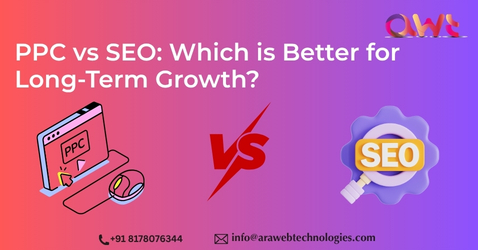
If you’ve ever tried to grow a business online, you’ve probably heard this debate:
“Go for SEO, it’s long-term.”
“No, run ads, you’ll get results faster.”
And then you get stuck.
Because both sound right.
But the truth is — they work in completely different ways.
Let’s keep it simple first
PPC (ads) = fast results
SEO = slow but steady
That’s the basic difference.
But that’s not enough to decide which one is better.
What PPC actually does
PPC (like Google Ads) brings traffic instantly.
You run ads today, and your website starts showing up today.
That’s why businesses connect with a Google Ads Agency in Delhi when they want quick visibility.
It’s useful when:
- You need leads immediately
- You’re launching something new
- You don’t want to wait months
But there’s a catch
The moment you stop paying… traffic stops.
No budget = no visibility.
That’s the biggest limitation of PPC.
What SEO actually does
SEO takes time.
You don’t see results in a week.
Sometimes it takes months.
But once it starts working, it keeps bringing traffic even if you’re not paying for every click.
That’s why businesses invest in SEO Service in Faridabad for long-term growth.
Why SEO feels slow
SEO is like building a base.
You’re creating content, improving your website, and slowly gaining trust from Google.
It doesn’t feel exciting in the beginning.
But over time, it becomes stable.
So which one is better?
If we’re talking strictly about long-term growth — SEO wins.
Because it keeps working even after the effort is done.
But that doesn’t mean PPC is useless.
Why PPC is still important
Even though it’s not long-term, PPC solves one big problem.
Time.
You don’t have to wait.
You get data quickly.
You understand what people are searching.
That’s why many businesses also work with the Best Google Ads Agency in Faridabad while building SEO slowly.
The real problem with choosing only one
If you choose only SEO:
You wait too long for results.
If you choose only PPC:
You keep spending continuously.
Both have limitations.
What smart businesses actually do
They don’t choose one.
They use both.
PPC for short-term leads.
SEO for long-term stability.
Example
Let’s say you just started your business.
You can’t wait 6 months for SEO.
So you run ads.
Meanwhile, you start SEO in the background.
After some time, SEO starts bringing traffic.
Now you’re not fully dependent on ads.
That’s the balance.
Cost difference
PPC:
- You pay for every click
- Cost depends on competition
SEO:
- You invest time and effort
- No cost per click
But SEO also needs patience.
Risk factor
PPC risk:
You stop paying → everything stops
SEO risk:
Algorithm changes can affect rankings
So both have risks.
What people usually do wrong
They expect quick results from SEO.
And long-term results from PPC.
That’s the opposite of how things actually work.
Another mistake
Running ads without a proper website.
Even if ads bring traffic, if your website is weak, nothing converts.
What actually works
- Use PPC to get quick traffic
- Start SEO for long-term growth
- Improve your website
- Stay consistent
That’s it.
When to focus more on SEO
- When your business is stable
- When you want consistent traffic
- When you want to reduce ad spend
When to focus more on PPC
- When you need leads quickly
- When you’re testing a new service
- When you’re entering a new market
Summary
If the question is:
“Which is better for long-term growth?”
The answer is SEO.
But if the question is:
“How do I grow my business properly?”
The answer is both.
Because growth needs speed and stability.
And these two together give you that.
FAQs
1. Can SEO completely replace PPC?
Not really. SEO is slow, while PPC helps you get immediate results.
2. Is PPC a waste of money?
No, but only if it’s managed properly.
3. How long should I do SEO before expecting results?
Usually a few months, depending on competition.
4. Should I stop ads once SEO starts working?
You can reduce the budget, but stopping completely is not always the best idea.
5. Which one is easier to start?
PPC is easier to start, SEO takes more time and effort.
Leave a comment
If you have any questions or would like to book a session please contact us.